Cost of Living: San Francisco vs. Denver: A Complete Breakdown
Last Updated: March 2026
San Francisco's cost of living is approximately 21%–42% higher than Denver's, depending on what you're measuring. The starkest gap is in housing: the median home in San Francisco sold for $1.3 million in January 2026, compared to roughly $650,000 in Broomfield, and $1,027,238 in Anthem, the area's most premium community. But taxes, income, utilities, and a dozen other factors shape the real picture. Here's the complete side-by-side comparison, built for Bay Area households seriously considering the move to the Denver metro.
The Headline Numbers: SF vs. Denver at a Glance
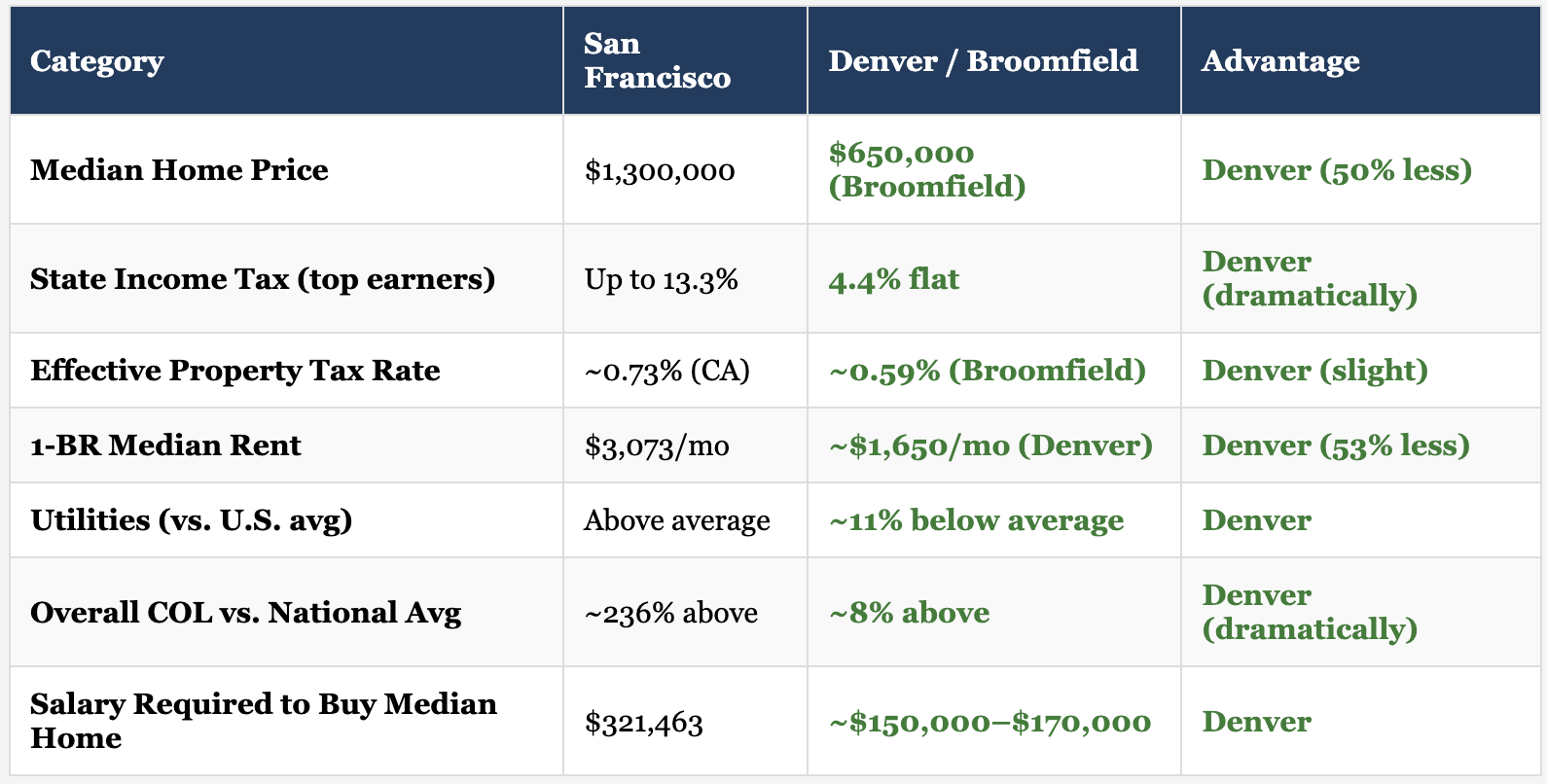
Sources: Redfin (Jan 2026), TurboTax / Tax Foundation (2025), AvenueWest Denver (Aug 2025), Visual Capitalist / Q4 2025 data, Expatistan (Dec 2025)
Housing: The Biggest Line Item by Far
The median San Francisco home sold for $1.3 million in January 2026, up 2.8% year-over-year (Source: Redfin, January 2026). Across the Bay Area, prices run even higher, San Mateo County hit a $2,000,000 median for single-family homes in November 2025, and Santa Clara County (where most Silicon Valley tech workers live) came in at $1,935,250 (Source: California Association of Realtors, November 2025).
In Broomfield, the median home price is approximately $650,000. In the Anthem community, the premium master-planned neighborhood where most Bay Area transplants land, the median is around $1,027,238. Even at Anthem's pricing, you're still buying roughly 21% more home for your dollar compared to San Francisco's city-wide median, and you're getting a newer build, significantly more square footage, a real garage, and a yard.
Here's what the same monthly payment buys you in each market, assuming a 20% down payment and a 7% 30-year fixed rate:
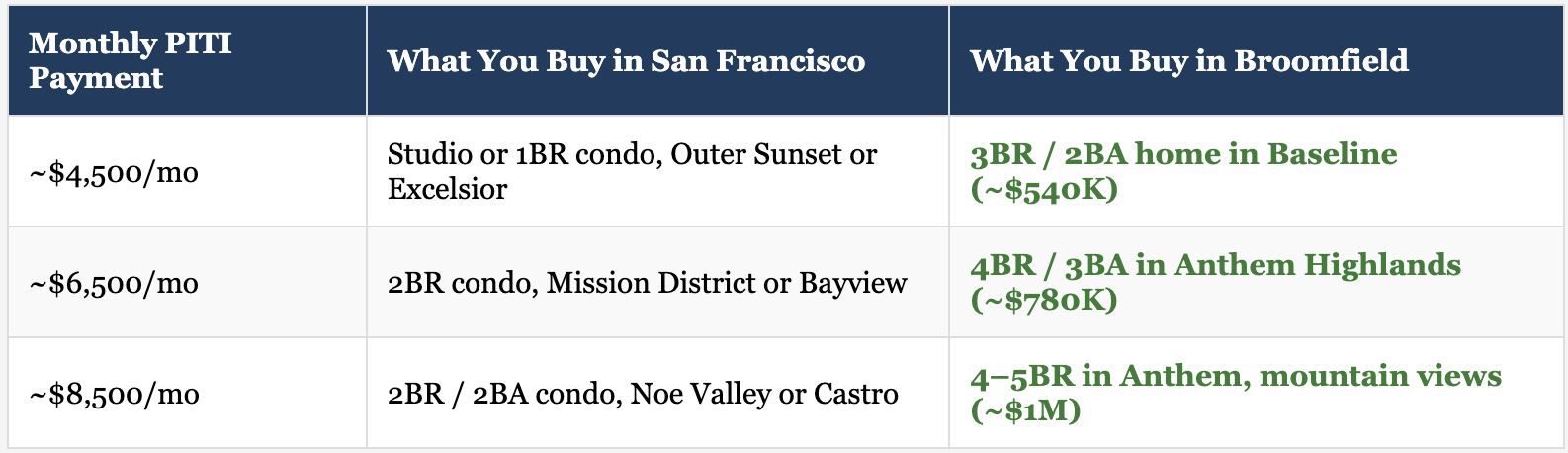
Payment estimates are approximate; actual PITI varies by exact rate, HOA, metro district, and insurance. Contact Nick for current listings at each price point.
Taxes: Where the Gap Gets Dramatic
California's income tax is the single biggest financial shock for people making this move but it cuts in your favor when you leave.
California uses a progressive income tax system with rates reaching 12.3% for incomes above $625,369 (single filer) and a 1% mental health surcharge on income above $1 million, bringing the true top rate to 13.3%, the highest state income tax rate in the country (Source: Tax Foundation, 2025).
Colorado charges a flat 4.4% on all taxable income.
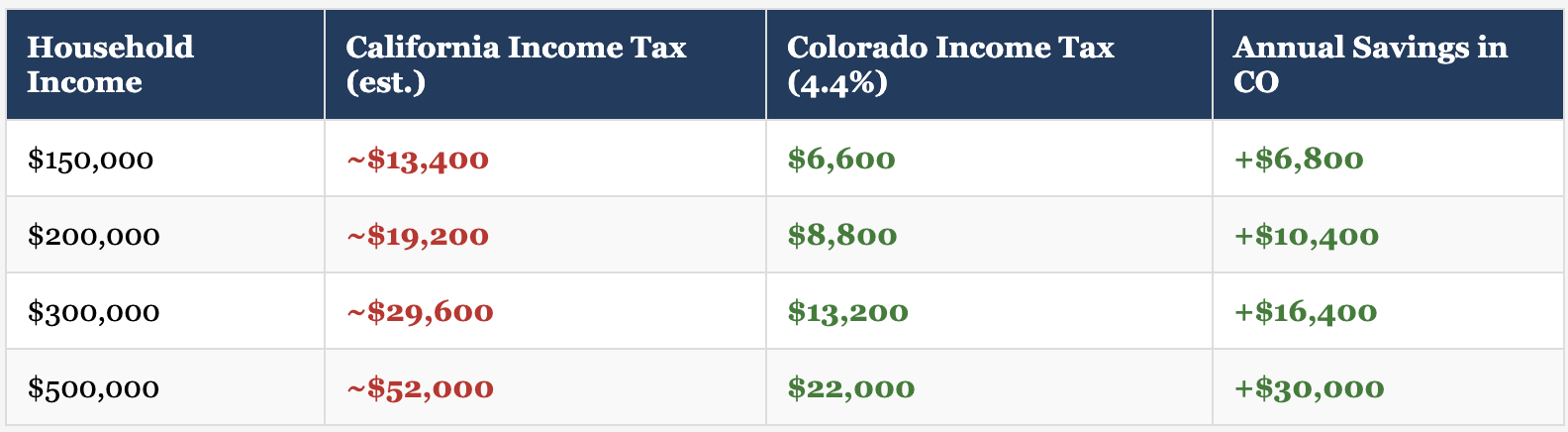
California figures are estimates based on the 2025 CA income tax brackets applied to a married filing jointly scenario. Actual liability varies by deductions, filing status, and other income. Consult your CPA for a personalized projection.
One note for Silicon Valley equity holders: Colorado does tax capital gains at the same flat 4.4% rate. California's capital gains are taxed as ordinary income at up to 13.3%. For tech workers holding unvested RSUs or planning to exercise stock options, the timing and state of residency at exercise matters significantly. This is worth a detailed conversation with your accountant before you move.
The "What Do I Need to Earn in Denver?" Calculation
This is the question I get most often from Bay Area clients who are considering a pay cut or a remote-work arrangement. Here's the honest framework.
According to Salary.com data, Denver employers typically pay about 18.4% less than San Francisco employers for the same role. If you're earning $200,000 in the Bay Area and you take a Denver-based job, you might see an offer around $163,000.
On the surface, that looks like a significant step back. But here's what the math actually looks like after state income tax and housing costs:
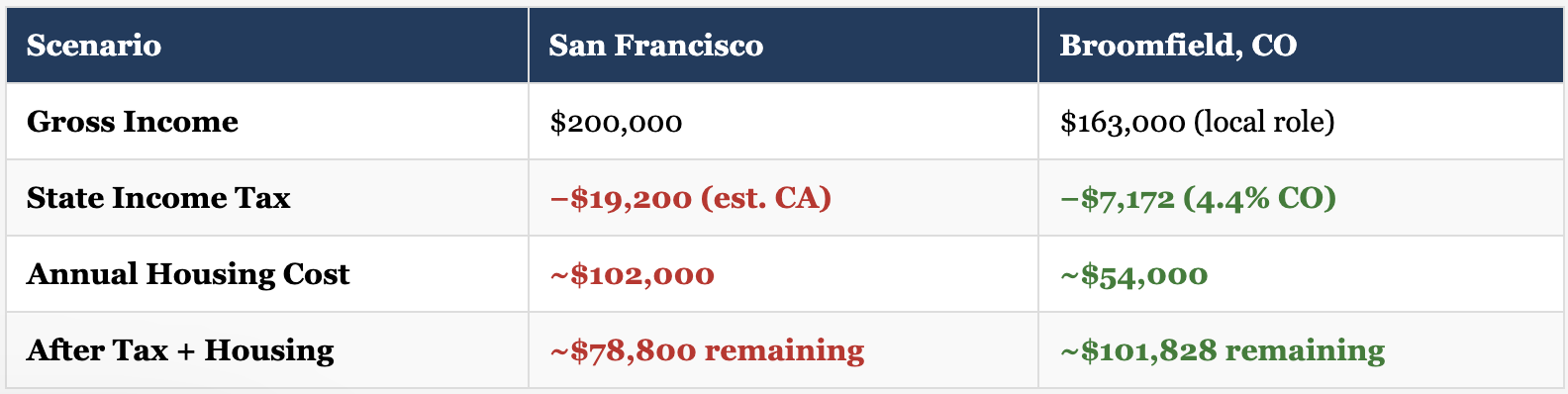
This is a simplified illustration. Federal taxes, 401(k) contributions, healthcare, and other deductions are consistent across both scenarios and excluded here. The point is directional, not precise.
The takeaway: a $163,000 salary in Broomfield, after state taxes and housing, leaves more in your pocket than $200,000 in San Francisco. If you're keeping your Bay Area remote salary and moving to Colorado, that math is even more favorable.
Daily Cost of Living: Groceries, Utilities, Transportation
Beyond housing and taxes, everyday costs differ in ways that add up.
Utilities: Denver's utility costs run approximately 11% below the U.S. national average (Source: AvenueWest Denver, 2025). San Francisco utilities are above average, with energy costs in particular driven up by PG&E rates.
Transportation: Denver's overall transportation costs are about 4.4% below the national average. RTD public transit offers monthly passes at $88. For drivers, Colorado's gas prices track near or slightly below the national average versus California's persistently elevated prices (California gas taxes + refinery costs routinely push prices $0.75–$1.25/gallon above the national average).
Groceries: Both cities run slightly above the national average, with Denver approximately 1% above versus San Francisco's higher premium driven by urban delivery markups and general Bay Area cost structures.
Childcare: California ranks 11th nationally for annual childcare cost (Source: Salary.com, 2025). Colorado's childcare costs are meaningfully lower, a relevant line item for the young-family demographic that makes up a significant share of Broomfield relocators.
What the Overall Picture Looks Like
According to Numbeo's cost-of-living index (updated December 2025), a household spending $10,000/month in San Francisco can maintain the same standard of living in Denver for approximately $7,150/month, a 28% cost reduction. Expatistan's index (December 2025) puts San Francisco 21% more expensive than Denver on an overall basis.
The range between sources (21% - 42%) reflects methodology differences and whether housing is weighted at purchase or rental cost. Either way, the directional answer is the same: Denver is materially cheaper at every income level and every lifestyle tier.
For the Silicon Valley household I work with most often, dual-income tech professionals earning $300,000 - $500,000+ combined, targeting a $900,000 - $1,100,000 home in Anthem, the financial calculus is not close. Between housing cost reductions, state income tax savings, and lower daily expenses, the annual improvement in cash flow frequently exceeds $60,000 - $80,000.
What Broomfield and Anthem Offer That Genuinely Competes with the Bay Area
I work with Bay Area transplants every week, and the concern I hear most is not about money, it's about lifestyle. "Will I miss what I had?" Here's the honest answer on what competes and what doesn't.
What Broomfield competes on: Top-rated schools (Broomfield's school district ranks among the best in the Denver metro), proximity to world-class outdoor recreation, newer construction with modern finishes, mountain views, a genuine sense of community in master-planned neighborhoods, and access to a growing tech and aerospace employment corridor along US-36 and in the Interlocken business park.
What's different (not worse, just different): No ocean. A different food and cultural scene, genuinely good, but not the breadth of San Francisco. Weather is more variable, with real winters and occasional hail. And altitude is real, about 5,400 feet in Broomfield, which takes a few weeks to acclimate to.
Ready to run the real numbers on your specific move from the Bay Area?
I put together personalized cost comparisons for Bay Area relocators every week, your actual income, your target home price in Broomfield, current mortgage rates, and the real monthly delta. No generic calculator, no Zestimate. A real analysis.
📧 Email Nick directly: NickAhrensRealestate@gmail.com
🏠 Browse listings: zillow.com/profile/NickAhrensRealEstate
Nick Ahrens is a Broomfield real estate expert with the North Denver Report, specializing in Anthem, Anthem Highlands, Baseline, and the North Denver metro.
Frequently Asked Questions: San Francisco vs. Denver Cost of Living
Is Denver cheaper than San Francisco? Yes, significantly. San Francisco's cost of living is approximately 21% - 42% higher than Denver's. The biggest driver is housing: the median SF home sold for $1.3M in January 2026, compared to $650,000 in Broomfield. A household spending $10,000/month in San Francisco could maintain the same lifestyle in Denver for approximately $7,150/month (Source: Numbeo, December 2025).
How much do I need to earn in Denver to match my San Francisco salary? Denver employers typically pay about 18.4% less than SF employers for the same role (Source: Salary.com, 2025). However, after factoring in California's income tax (up to 13.3%) vs. Colorado's flat 4.4%, most households earning $200,000+ in San Francisco come out ahead in disposable income in Broomfield even with a pay cut.
What is the median home price in San Francisco vs. Denver? As of January 2026, the median home sale price in San Francisco is approximately $1.3 million (Source: Redfin). In Broomfield, the median is approximately $650,000. In Anthem, Broomfield's premium community, the median is around $1,027,238, still roughly 21% less than SF's median, with more square footage and land.
Is California or Colorado income tax lower? Colorado's income tax is dramatically lower. California's top rate reaches 13.3%. Colorado charges a flat 4.4%. On a $300,000 household income, that difference is approximately $16,400 per year.
What is the best suburb near Denver for Bay Area transplants? Broomfield and specifically Anthem and Anthem Highlands consistently rank as the top landing spot for Bay Area relocators. Top schools, mountain access, major tech employers on the US-36 corridor, newer construction, and home prices well below San Francisco's median.